
Manifesting the Dance of Harmony in Shakespeare’s “As You Like It”
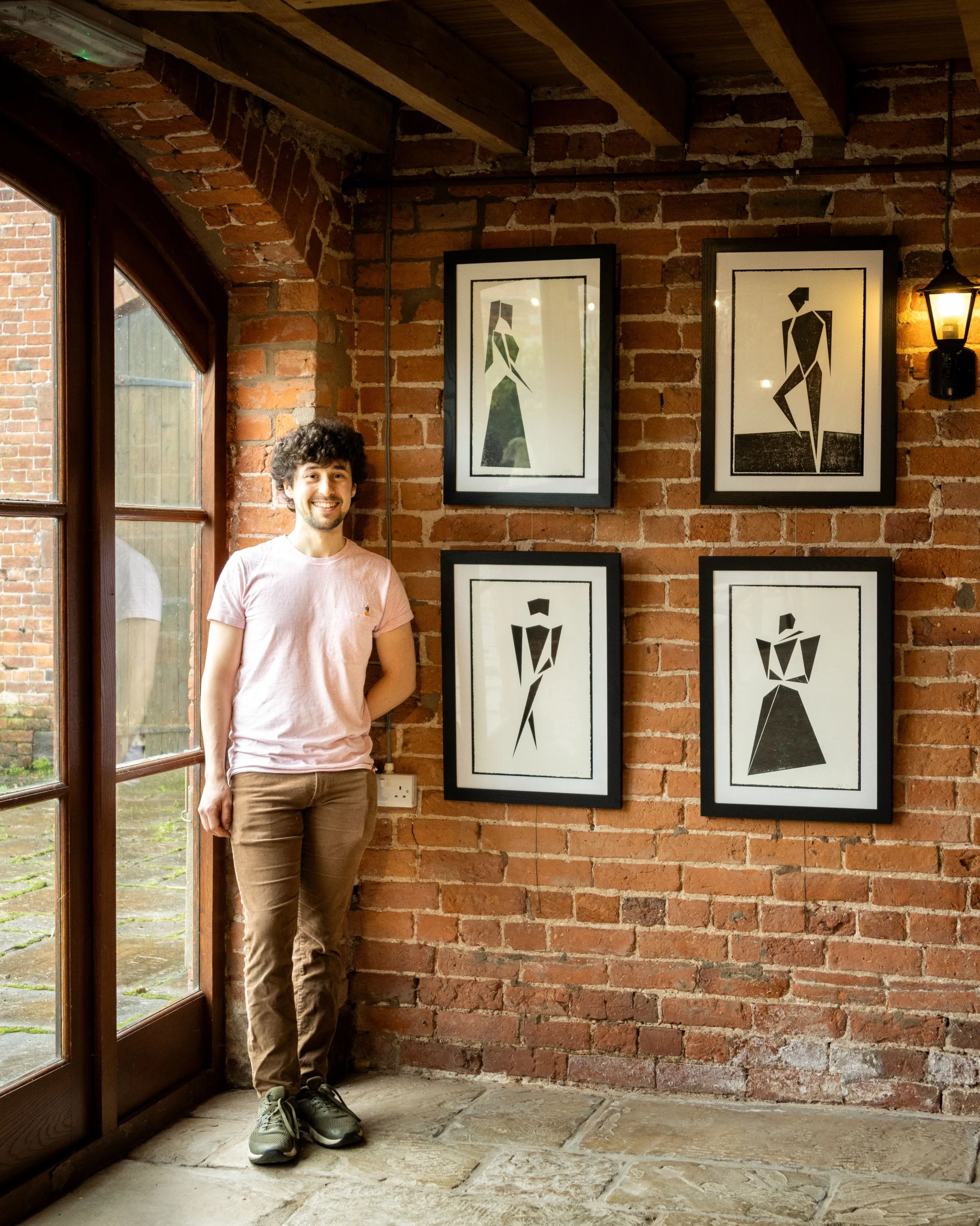
Chandler undertook a culturally significant project that drew a direct connection with Shakespeare’s play As You Like It, and Soulton Hall in Wem, Shropshire.
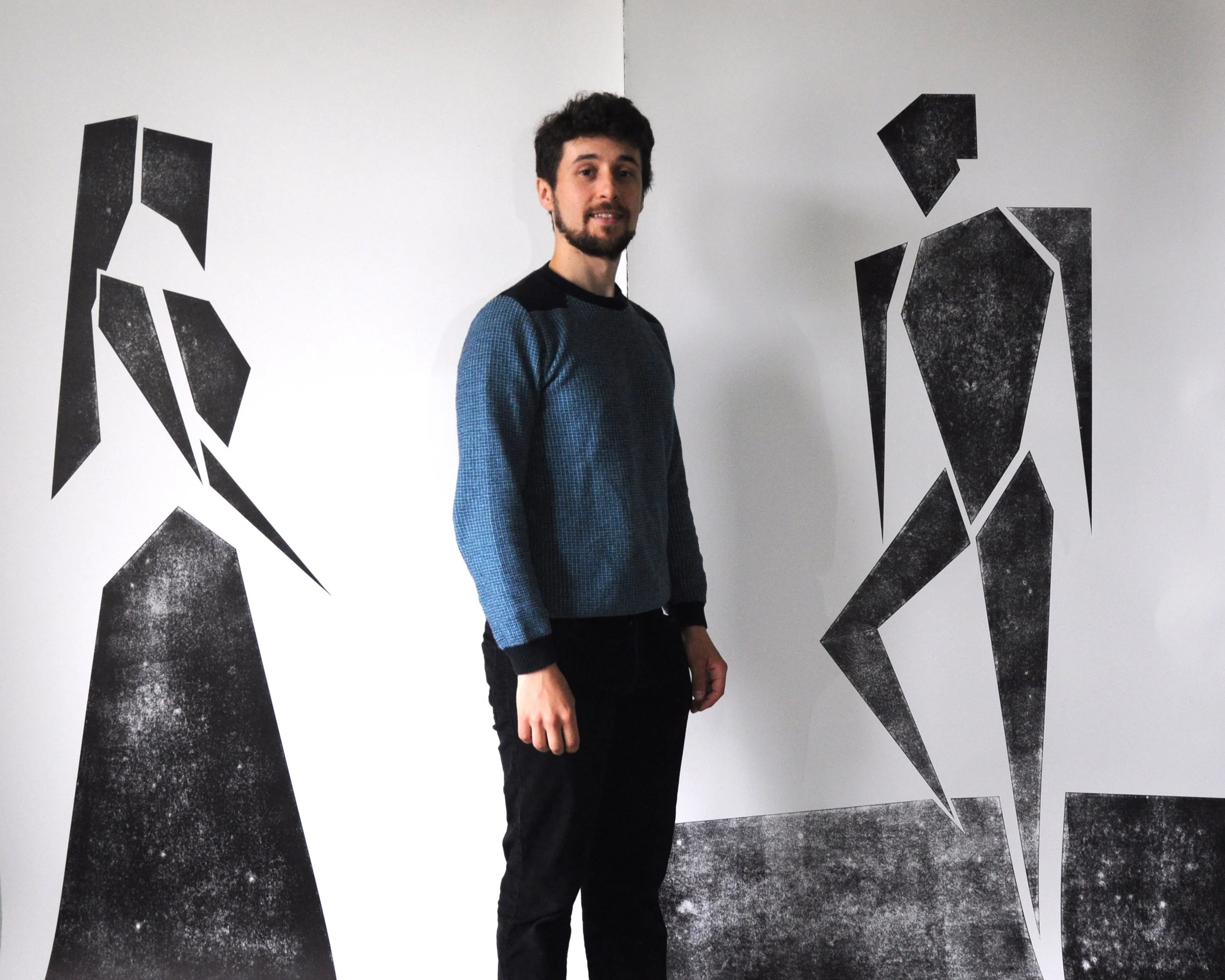
Access was granted by The Royal Shakespeare Company, The Globe Theatre, and Regent’s Park Open Air Theatre to archival imagery to help inform the initial designs. Sketches from these reference points led to the design of eight two-meter-tall relief prints featuring the four couples who marry at the end of the play and dance together.
The choreography of this dance was discovered on the grounds of Soulton Hall; it spoke of peace, harmony, and statecraft. With this print work well underway, Chandler embarked on developing these prints into relief sculptures, with a series of “Flatland” pieces.
“A Really extraordinary story.. an incredible story…an authentic link to Shakespeare”
– Tom Holland, The Rest Is History podcast
Soulton Hall, Shakespeare & The Rest Is History
My work has always been motivated by the human form, balance, and tension. This project introduces a deeply personal layer, drawing directly from my experience living with and as an ambassador for Ehlers Danlos Syndrome (EDS).
The Concept: My signature angular, geometric lines—representing order and idealised life—will be juxtaposed against the tumultuous, erratic scars left by natural earth and wood firing. The resulting ceramic works will embody the ultimate tension between control and disorder, destruction and rebirth. It is a visual metaphor for human vulnerability, resilience, and hope.
Featured on The Rest Is History
That heritage has now reached a much wider audience. Soulton Hall's research carried out by cultural consultancy Byrga Geniht (James D. Wenn and James Syrett) forms part of a series on the Tudors on The Rest Is History, hosted by Tom Holland and Dominic Sandbrook, one of the world's most popular history podcasts.
Ahead of the episode, Tom Holland had already singled out the episode, calling it a “a really extraordinary story” with "an authentic link to Shakespeare" a description that captures exactly what this project set out to explore: the idea that Soulton Hall's Tudor architecture and its Shakespearean associations are only the visible surface of something much richer underneath.
Lead researcher James Wenn has described Soulton as "a rich and fascinating bridge between sixteenth-century worlds" — a phrase that could equally describe the aim of the artwork itself: connecting Elizabethan literature, Tudor architecture, and contemporary visual art in a single, coherent piece.

The Globe Theatre
Access to the archives of the Globe Theatre gave Chandler valuable insight into the project
‘Jacob Chandler’s collection captures the vitality of Shakespeare’s characters in all their edgy, front-footed, dynamic beauty. This is the world of As You Like It brought thrillingly to life.’
Quote from Dr Will Tosh - Head of Research at the Globe Theatre

SOULTON HALL
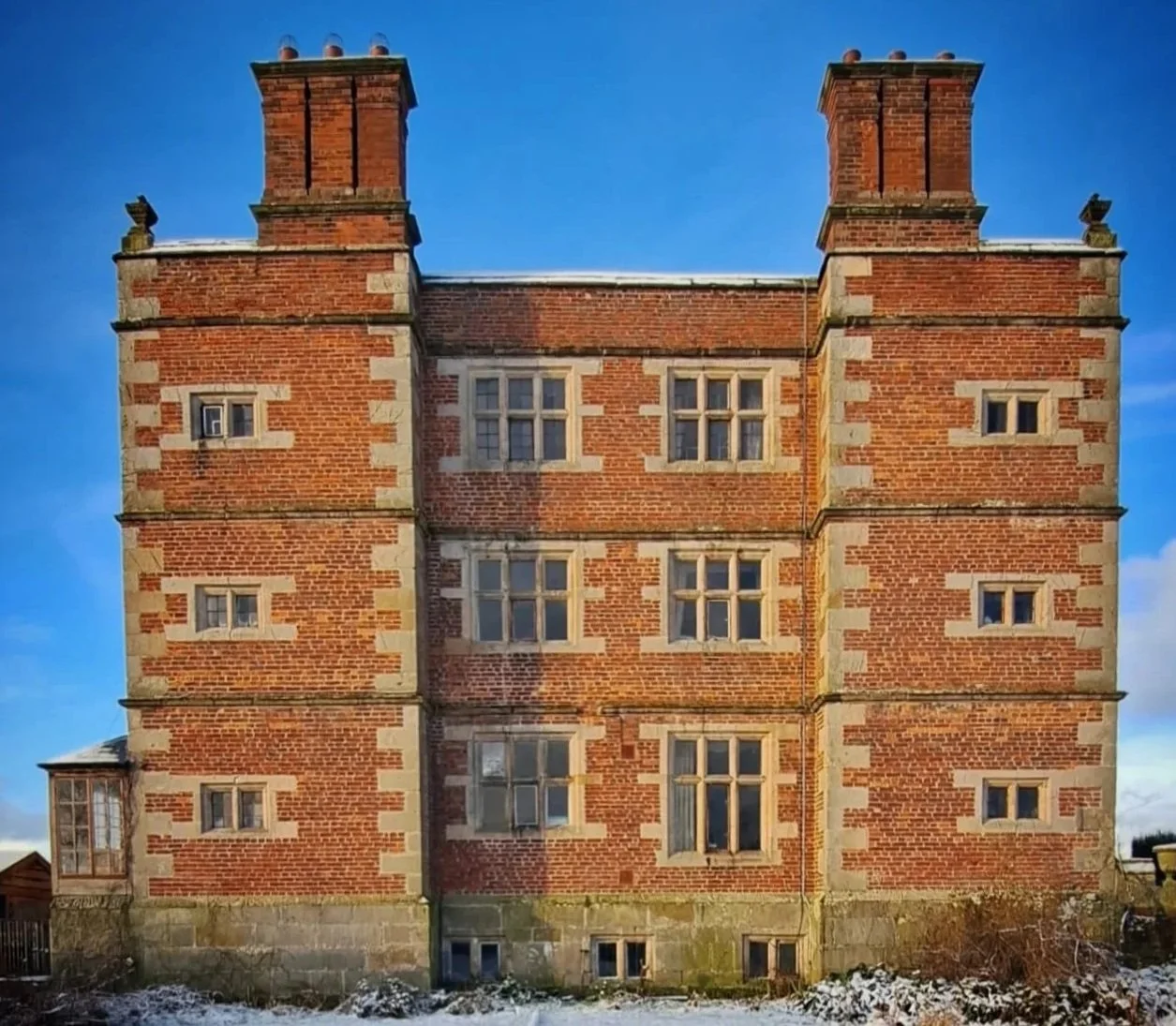
This 16th century manor, located in Shropshire, England and the inspiration of Shakespeare’s As You Like It, is the home of 'Old' Sir Rowland who Hill built this house in a Renaissance code in the reign of Queen Mary I, and ushered in the culture of Elizabethan England.
The hall has a rich history, and it is associated with figures like Sir Rowland Hill, who played a role in its construction. Hill defies easy definition. This figure of the Tudor era was a true Renaissance man: statesman, philosopher, merchant, and patron of the arts. His life intertwined with pivotal events and themes that shaped England's story.
While his accomplishments are numerous, his most lasting impact stems from publishing the Geneva Bible in 1560.
“We have been delighted with the way that Jacob has approached our commission. He has embraced the academic rigour of analysing the characters in Shakespeare's play, As You Like It. Consultation with The Globe and The Royal Shakespeare Company has ensured his portrayal is both well referenced and current. Using source material from the likes of Helen Miram and David Tennant he has reduced character and emotion to basic forms, in a way that has surpassed our expectations. Jacob's natural enthusiasm and skill have been essential for this project.”
Quote Tim Ashton of Soulton Hall

BYRGA GENIHT
James David Wenn is an expert in the social and architectural history of the English people.
Educated in the shadow of Gloucester Cathedral, at Cambridge University (Anglo-Saxon, Norse and Celtic), and Leicester University (The Centre for the Study of the Country House), James has spent a lifetime refining a deep understanding of the soul of historic English architecture and design.
BYRGA GENIHT is a portal through which James makes this knowledge and expertise available to individuals and institutions seeking clarity and vision in this area and has added a wealth of knowledge to this project.